Total Ankle Replacement

What is a Total Ankle Replacement?
Total ankle replacement is an established treatment for severe ankle arthritis. The aim of the operation is to relieve pain while preserving movement of the ankle, allowing a more natural pattern of walking than is possible with a fused joint.
During the operation, the damaged joint surfaces are removed and replaced with specially designed metal components separated by a highly durable plastic bearing (ultra-high molecular weight polyethylene). The replacement is similar in principle to a knee replacement and uses the same technologies, providing a smooth, low-friction joint surface.
Once the ankle has healed, most patients experience a significant reduction in pain together with improved mobility and function. Many are able to return to full daily activities and nearly all sports including tennis, golf, skiing and even running – all the activities that had become difficult because of arthritis. Although an artificial ankle cannot completely reproduce a normal joint, the aim is to provide a comfortable, mobile and durable ankle for many years.
Ankle replacement has developed considerably over the last twenty years and is now supported by good long-term clinical evidence. Large published studies have shown that around 90% of modern ankle replacements are still functioning well after 10 years, with continued good results reported beyond this.
My own published research has followed patients for up to 18 years after ankle replacement and demonstrated a 93% implant survival, together with sustained improvements in pain and function. These findings, published in Bone & Joint Open and Foot & Ankle International, provide further evidence that ankle replacement can be a reliable long-term solution for appropriately selected patients.
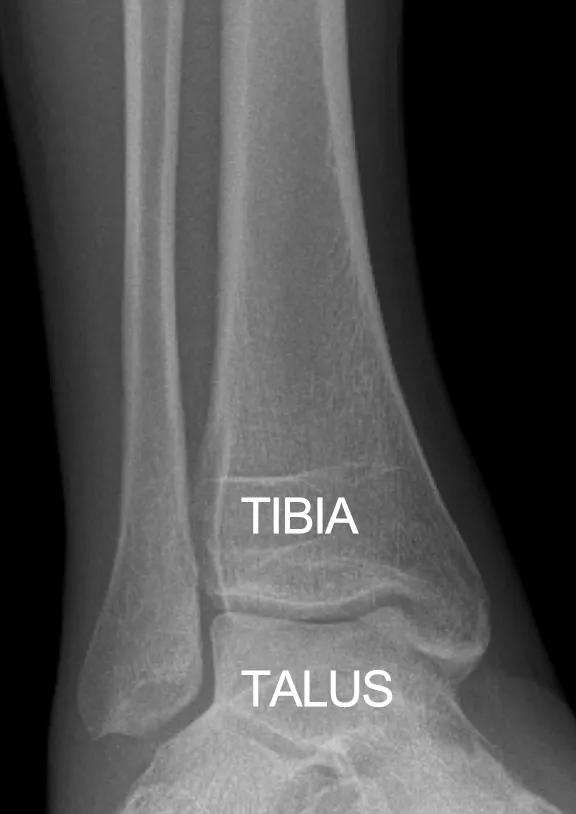
The ankle joint is made up of the Tibia articulating with the talus...
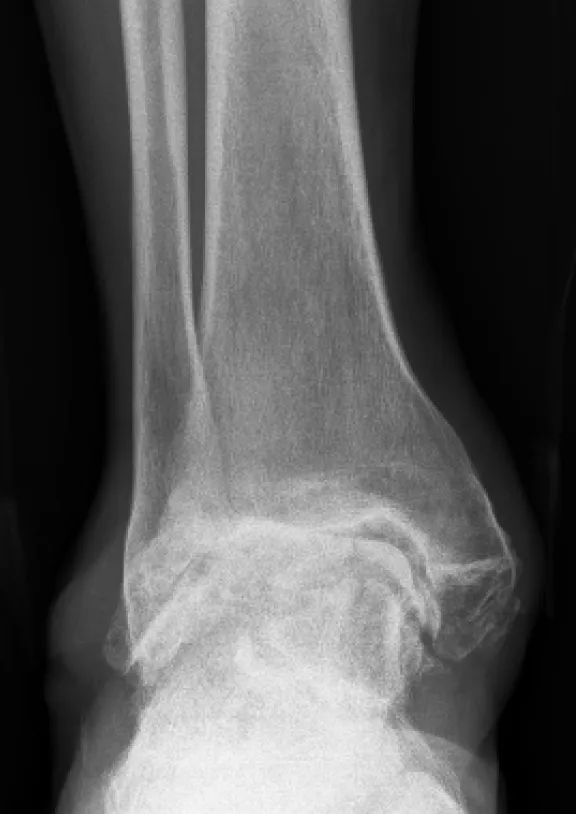
Ankle arthritis occurs when the cartilage of the joint has worn out and degenerated, so that the joint articulation is now bone rubbing on bone (loss of joint space on xray). This causes the bone to become thicker and sclerotic (whiter on xray) and to form large spurs around the periphery of the joint (osteophytes).
Vantage® Total Ankle System
Following more than two decades of experience performing ankle replacement surgery, I now use the Vantage Total Ankle Replacement almost exclusively. This modern fourth-generation implant has achieved an ODEP 3A* rating, reflecting the highest level of independently assessed evidence currently available for a three-year ankle replacement. It has also demonstrated excellent performance in the National Joint Registry.
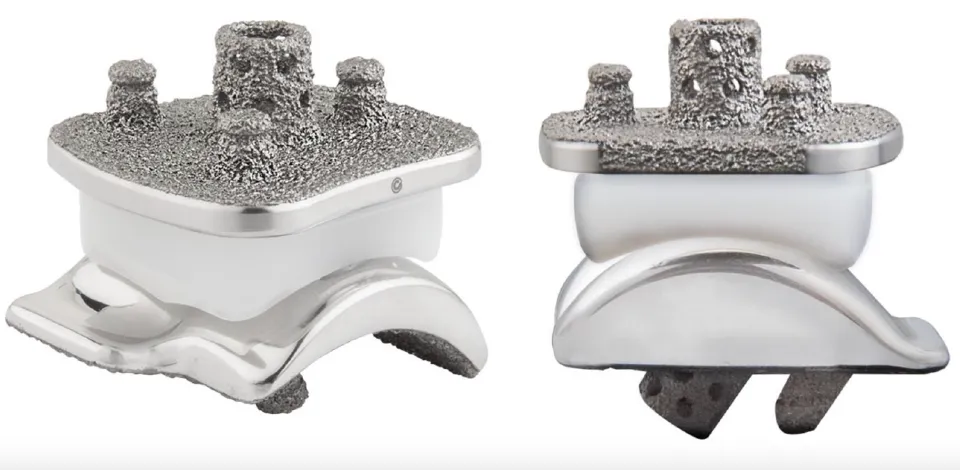
It combines the latest technological advances with the proven designs and methods, from over the last 30 years.
The steel components have a plasma sprayed titanium backing that bone actively grows on to, securing the implants for the long term. The articulation is using ultra high molecular weight polyethylene which has a proven track record in hip and knee replacements for the last 3 decades.
Preparation for Surgery
You should have received a letter detailing the codes and costs for the surgery and giving instructions on where to go and at what time. Please check these details carefully as you will be liable for any costs not covered by your insurers.
You will need to be nil-by-mouth – No food for 6 hours before surgery. Clear fluids can be taken for up to 2 hours before the operation.
MRSA status
Before or on admission to hospital a nasal swab will be taken to screen for MRSA. There is a small chance this is positive. If so your operation will be moved to the end of the list or rarely to another day to prevent cross infection.
Prior to surgery
It is important to prepare for the forthcoming surgery.
a) Leg care - make sure that the leg and skin are as healthy as possible.
- The surgery cannot go ahead if there are any grazes, insect bites or infections. Please notify Fortius if you have any of these.
- If you suffer from swollen ankles, use a compression sock or keep the legs elevated as much as possible for 1-2 days before surgery.
b) Prepare for immediate weightbearing – this implant is designed to be fully weightbearing immediately. Naturally it will be uncomfortable and you will be given a supportive boot to wear for the first 2 weeks. You may wish to use crutches too.
c) Prepare your stay at home.
- How to elevate the leg – the ankle will need to be up high above the knee and hip for 2 weeks. Either in bed or on the Sofa 45mins per hour. You cannot sit in a chair for more than 1-2 mins.
- Food requirements
- Washing & Bathing – you will be given a waterproof cover. Using a cheap plastic chair in the shower will make it much easier.
- Assistance at home – there are plenty of private nursing services that can help.
- Post operative hotels – it may be easier to check in for a 2 week stay. This is not usually covered by your insurers.
d) On the day of surgery.
- No food, drink or smoking 6 hours before surgery (clear water can be taken up to your arrival in hospital)
- Please bring any xrays and scans of the ankle with you
Admission
You will need to go to hospital at least 2 hours prior to the surgery, to prepare for surgery and for your stay at hospital. The surgery can be performed as a day case, but most patients stay 1 night.
Surgery
The operation usually takes around two hours, although this will vary depending on the complexity of the surgery.
It is normally performed under a general anaesthetic together with a popliteal nerve block. This is a local anaesthetic injected behind the knee, similar in purpose to an epidural, which numbs the leg below the knee. It provides excellent pain relief during and after surgery and may remain effective for up to 24–48 hours, occasionally a little longer.
The operation is performed through an incision at the front of the ankle. The joint is carefully exposed while protecting the surrounding nerves, tendons and blood vessels. Using specialised guides and X-ray imaging, the damaged joint surfaces are removed with great precision and the bones are carefully prepared to receive the new joint.
Trial components are then inserted to check the size, alignment, stability and range of movement before the final implants are selected. Once the ideal position has been confirmed, the definitive metal components are implanted together with a highly durable polyethylene bearing.
Modern ankle replacements are uncemented. The metal components have a porous titanium coating that encourages the surrounding bone to grow onto the implant, providing secure long-term fixation.
The wound is then closed with dissolvable sutures and a protective dressing and plaster splint are applied.
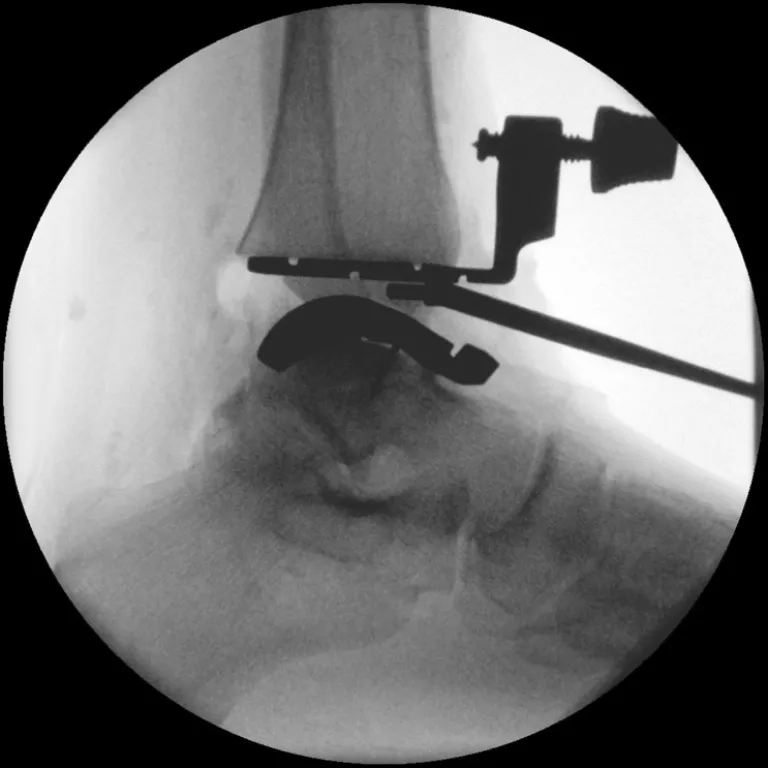
Intra operative xrays
Using the latest and best techniques, with precision implants and guides for exact placement and alignment of TAR. Throughout surgery, the alignment and positioning is continually checked using xrays and the custom built guides for insertion for precise resection of the arthritic joint surfaces and the best possible ankle joint replacement.
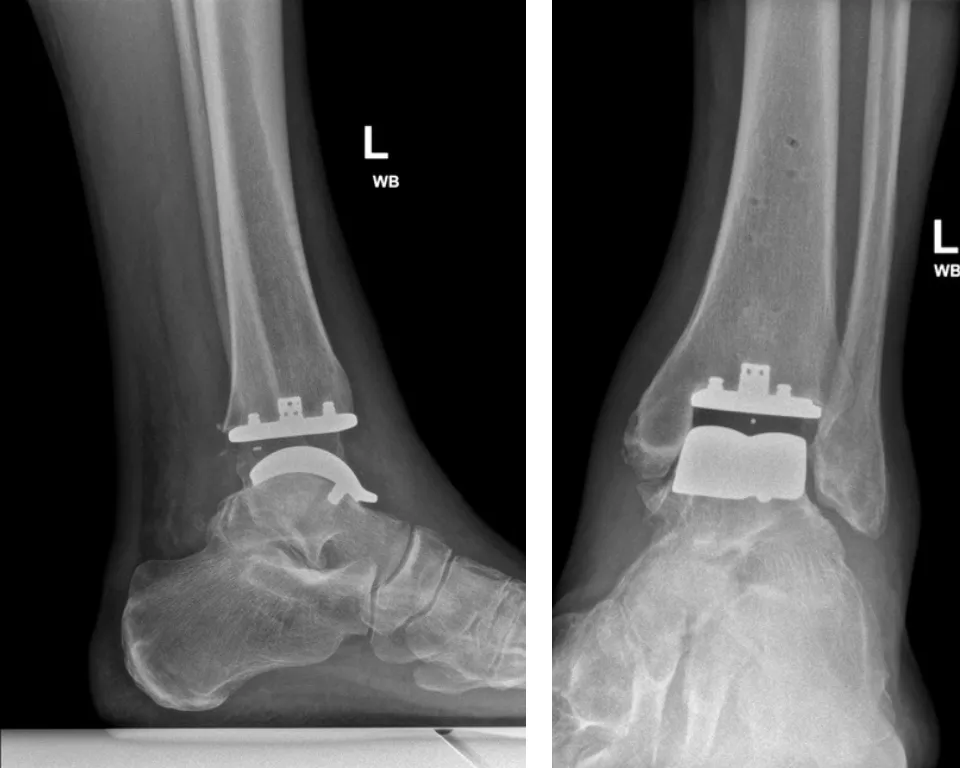
Final images
The precise alignment jigs allow for exact placement of the ankle joint at the centre of the mechanical axis. This is one of the variables that ensure best function of the ankle and long term survival.
Post Surgery
For the first two weeks, reducing swelling is one of the most important parts of your recovery. I recommend keeping the foot elevated above the level of your pelvis for around 45 minutes of every hour whenever possible. This helps reduce swelling, promotes wound healing and reduces the risk of wound complications and infection.
During this period, you will spend most of your time resting with the leg elevated, either in bed or reclining on a sofa. Sitting with the foot dependent in a chair should be limited to short periods, as the ankle will quickly become swollen and uncomfortable.
Short periods of walking and standing are encouraged for essential daily activities, but these should be balanced with regular elevation throughout the day.
At around two weeks after surgery, you will be reviewed in clinic. The wound will be checked, the stitches removed and X-rays performed. If healing is progressing well, you can begin walking without the protective boot. Physiotherapy usually starts at this stage and plays an important role in restoring movement, strength and confidence. Recovery continues for many months, with gradual improvements in swelling, mobility and function over the first year.
Swelling
Swelling is a normal and expected part of healing after surgery. During the first two weeks, however, it is important to keep swelling to a minimum. Excessive swelling places tension on the wound, can delay healing and increases the risk of wound problems and infection. For this reason, careful elevation of the leg during the early recovery period is one of the most important parts of your rehabilitation.
Cold compression devices, such as the Game Ready or Cryo/Cuff systems, can also help to reduce pain and swelling. If you are interested in using one of these, please speak to the ward staff before you leave hospital.
Once the wound has healed, swelling becomes a normal part of the recovery process rather than a cause for concern. It is common for the ankle and foot to swell during the day, particularly after standing or walking, before settling again overnight with rest and elevation. This pattern can continue for several months and gradually improves as the tissues recover.
"I would like to thank you for the wonderful job done... a huge success. I walk my dogs over rough ground, climb up fairly steep slopes with little or no swelling. In short I am thrilled with the operation!".
LW

New ankle replacement reaches of top of mountain in Mongolia!
Risks of surgery
Swelling
Initially the foot will be very swollen and needs elevating. The swelling will disperse over the following weeks & months but will still be apparent at 6-9 months.
Infection
This is the biggest risk with this type of surgery. Smoking increases dramatically. You will be given intravenous antibiotics to prevent against it. The best way to reduce your chances of acquiring an infection is to keep the foot elevated for 10 days. If there is an infection, it is usually mild and resolves with a course of antibiotics. Rarely, it can be severe requiring further surgery.
Nerve Damage
Alongside the incision are three nerves – the deep & superficial peroneal and the saphenous nerves. They supply sensation to the side and the top of the foot and toes. They may become damaged during the surgery and this will leave a patch of numbness, either at the side of the foot or over the top of the foot and toes. This is usually temporary but may be permanent. There is approximately a 10% of this happening.
Wear of the replacement
The metal / polyethylene joint has an unknown lifespan at present. When it fails, it is either due to infection or wearing away of the polyethylene. This usually takes several years; we do not have an average longevity yet. Once the joint wears out, further surgery is normally required to fuse the joint together. Hopefully, this never becomes necessary, but a 10-15 year period is a reasonable estimate for the survival of the ankle joint.
Blood Clots
There is a risk of DVT until you are walking on the ankle. You will be given protective calf pumps during surgery and anticoagulants post operatively, to reduce this risk. Despite this there is still a small chance one occurs. If this happens you will treated with further tablets.
Fracture
There is a risk in up to 10% of cases. The surgery is performed through a very tight space to access the ankle joint, unlike other joints where the entire joint can be exposed. Occasionally one of the side bones of the ankle joint fractures during the surgery - If this happens it will be fixed immediately.
Dislocation
This is rare.
Immediately after surgery
You will be referred to a physiotherapist who will advise on walking while keeping weight off the ankle using crutches. You will be sent home only when you are comfortable.
Pain relief and take home medications
You will be given high doses of prescription painkillers to take home. Use these for the first 2-3 days and reassess.
There is a small risk of blood clots “DVT’s” and you will be prescribed a blood thinner for 4 weeks.
Recovery from surgery
One of the advantages of modern ankle replacement is that the early recovery is often quicker than many patients expect. Because you are able to bear weight immediately in a protective boot, there is usually no need for prolonged use of crutches, allowing you to regain independence more quickly.
However, this is still major surgery and the deeper tissues, bone and soft tissues require many months to heal fully. It is therefore important to balance early activity with patience, allowing the ankle time to recover.
Most patients are walking comfortably around the house within the first few weeks and gradually increase their walking distance thereafter. As a guide, it usually takes 6–8 weeks before patients are comfortable walking around a mile, although this varies depending on age, fitness and the severity of the arthritis before surgery.
Physiotherapy is an important part of recovery. Regaining movement, strength, balance and confidence takes time, and a structured rehabilitation programme will help you achieve the best possible long-term result. Although the majority of recovery occurs during the first three to six months, improvements in strength, flexibility and swelling often continue for up to a year.
Activity and time off work
- In general, 4 weeks off work is required for sedentary posts
- 8 weeks for standing or walking posts
- If you are a farmer, gardener or involved in similar active pursuits it may be 12 weeks before you can begin to put strain on the joint.
Faqs
For surgery on the left leg this can start after 2 weeks in an automatic.
For surgery on the right leg or if a manual car, usually 4 weeks or once you can walk without the protective boot.
Once the wounds are mature after 3 weeks.
For seated exercises after 2 weeks , for standing exercises after 4 weeks.
Usually once the wounds are healed after 2-3 weeks but short 1-2 hour flights may be possible sooner.