Pes Cavus (High-Arched Foot)

What is Pes Cavus?
Pes cavus simply means a high-arched foot. In most people this is a normal foot shape that runs in families and causes no problems throughout life.
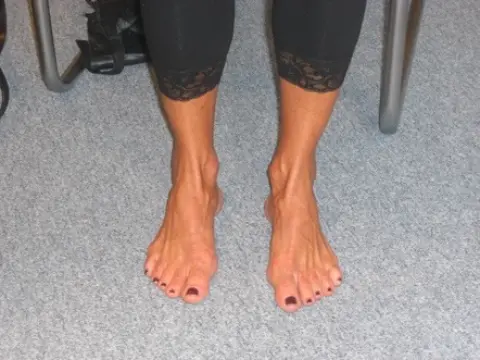
In a small number of people, however, the shape of the foot alters the way the foot and ankle function. The foot naturally leans onto its outer border, changing the way forces are transmitted through the foot and ankle. This can lead to recurrent ankle sprains, tendon injuries, stress fractures and, over many years, ankle arthritis.
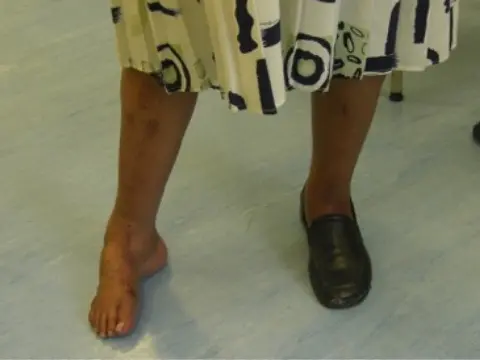
Less commonly, a cavus foot develops as the result of an underlying neurological condition affecting the muscles of the foot and leg. One of the most important parts of the assessment is determining whether the cavus foot is simply an inherited foot shape or whether there is an underlying neurological cause requiring further investigation.
Cavus Foot Syndrome
Although most people with a high-arched foot never develop symptoms, a small number develop a characteristic pattern of problems that I commonly see in my practice. Collectively, I refer to this as Cavus Foot Syndrome.
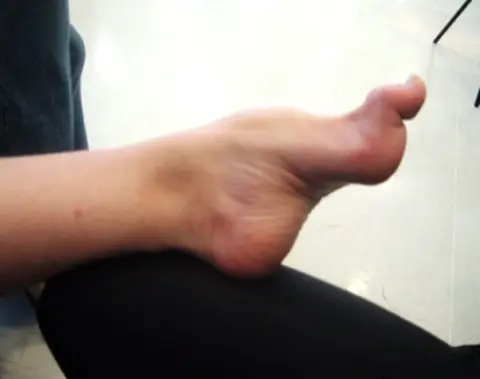
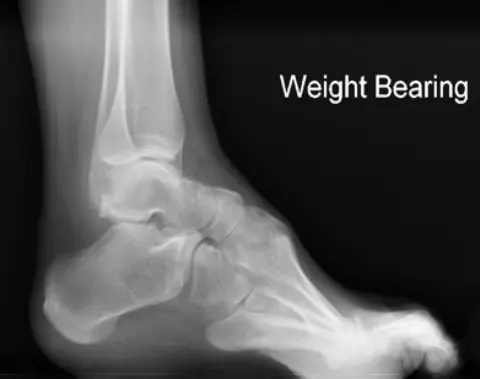
The underlying problem is the abnormal biomechanics of the foot and ankle. Because the foot naturally loads its outer border, excessive forces are transmitted through the outside of the foot and ankle.
Over time this may lead to recurrent ankle sprains, ligament instability, peroneal tendon disease, clawed toes, metatarsalgia, stress fractures and, in some patients, ankle arthritis.
Recognising the underlying cavus foot is essential. Whilst each of these conditions can be treated individually, failure to address the abnormal biomechanics may result in persistent symptoms or recurrence. In many patients, successful treatment involves not only repairing the damaged ligament, tendon or fracture, but also correcting the underlying alignment of the foot where appropriate.
Problems I Commonly see due to Pes Cavus
Whilst many people with a high-arched foot never develop symptoms, there are several characteristic problems that I commonly see associated with pes cavus. These are all related to the abnormal biomechanics of the foot and ankle and are often different manifestations of Cavus Foot Syndrome. Recognising the underlying cavus foot is often the key to successful long-term treatment.
Recurrent Ankle Sprains and Ligament Instability
The most common problem is recurrent ankle sprains and chronic ankle instability. Because the foot naturally leans onto its outer border, the ankle is much more likely to twist during everyday activities and sport. Many patients describe repeatedly “going over” on their ankle, often over many years. Each sprain stretches or tears the lateral ankle ligaments, eventually leading to chronic instability.
Simply repairing the ligaments may not always be enough. If the underlying cavus foot is not recognised, the abnormal forces remain and the repaired ligaments continue to be overloaded. In these cases, successful treatment may require both ligament reconstruction and correction of the underlying cavus foot to restore a more balanced alignment.
Peroneal tendon problems
(Pes Cavus-Induced Peroneal Tendinopathy)
One of the most frequently overlooked consequences of a cavus foot is long-term damage to the peroneal tendons.
These tendons run along the outside of the ankle and act as important stabilisers, helping to prevent the foot from rolling over. In a cavus foot they are required to work much harder than normal, often over many years.
Initially this causes inflammation and pain along the outside of the ankle, known as peroneal tendonitis. As the overload continues, the tendons may gradually degenerate, split or rupture.
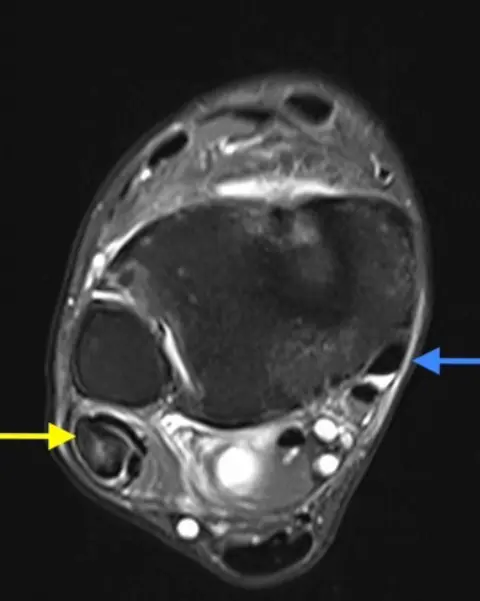
Yellow arrow Abnormal Peroneal Tendon
Blue Arrow normal tendon
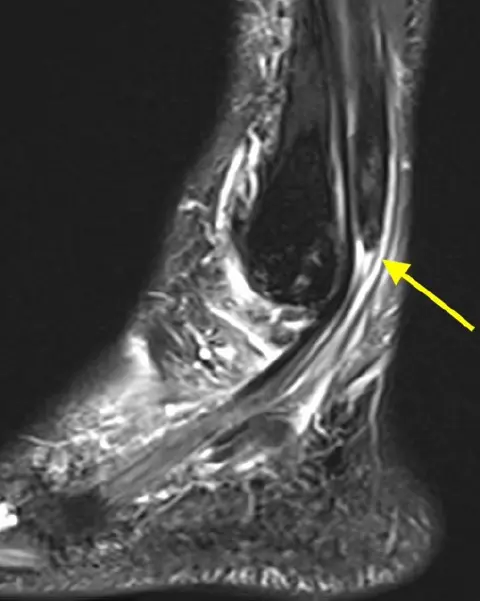
Yellow arrow ruptured tendon
Early tendonitis may improve with physiotherapy, orthotics and activity modification. Unfortunately, once the tendons have become significantly damaged, the problem is often permanent and surgery may be required.
Treatment may involve minimally invasive peroneal tendoscopy, repair or reconstruction of the damaged tendons and, importantly, correction of the underlying cavus foot where appropriate. Treating the tendon alone without addressing the underlying alignment will not provide a durable long-term result.
Clawed Toes and Metatarsalgia
The abnormal mechanics of a cavus foot also place increased pressure beneath the ball of the foot. As the muscles and tendons become progressively unbalanced, the toes may gradually develop a clawed position. The prominent toe joints frequently rub against shoes, causing pain, corns and callosities.
The abnormal loading also increases pressure beneath the metatarsal heads, producing huge callosities and pain beneath the ball of the foot (metatarsalgia). Many patients describe the sensation as “walking on pebbles”, particularly on hard surfaces.
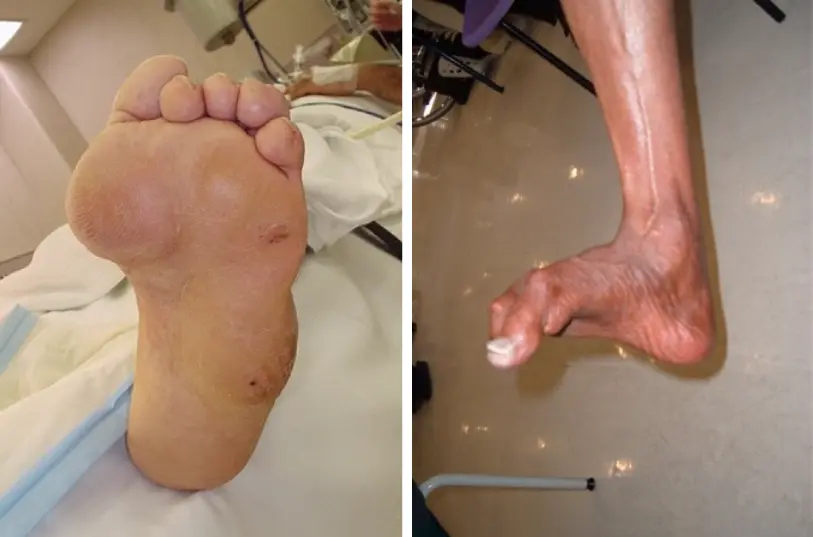
Initially this can be managed with shoeware changes and orthotics to reduce the pain and high pressures. Over time though surgery is often needed to address this. The exact surgery will depend on the specifics of each case but usually involves Minimally Invasive techniques to lift and shorten the metatarsals and fusions to correct the toe deformities.
Stress Fractures and Overload Injuries
Pes cavus is a well-recognised cause of stress fractures, particularly in runners and professional athletes. Because the abnormal foot alignment concentrates body weight through specific areas of the foot and ankle, repetitive overload can eventually result in stress injuries. The commonest sites are the fifth metatarsal and the tibia, particularly in runners and professional athletes.
These injuries are slow to heal because the abnormal loading continues with every step. In athletes I usually recommend surgery. Fractures heal more reliably, rehabilitation is quicker and return to sport is significantly faster than prolonged conservative treatment.
Where the cavus foot is a significant contributing factor, correction of the underlying alignment may also be needed – this is to restore the normal biomechanics and stress on the foot & ankle. Ths helps the fracture to heal and reduces the risk of future stress fractures.
Ankle Arthritis
Over many years, the combination of abnormal alignment and recurrent ankle sprains can lead to uneven loading of the ankle joint and even ankle arthritis.
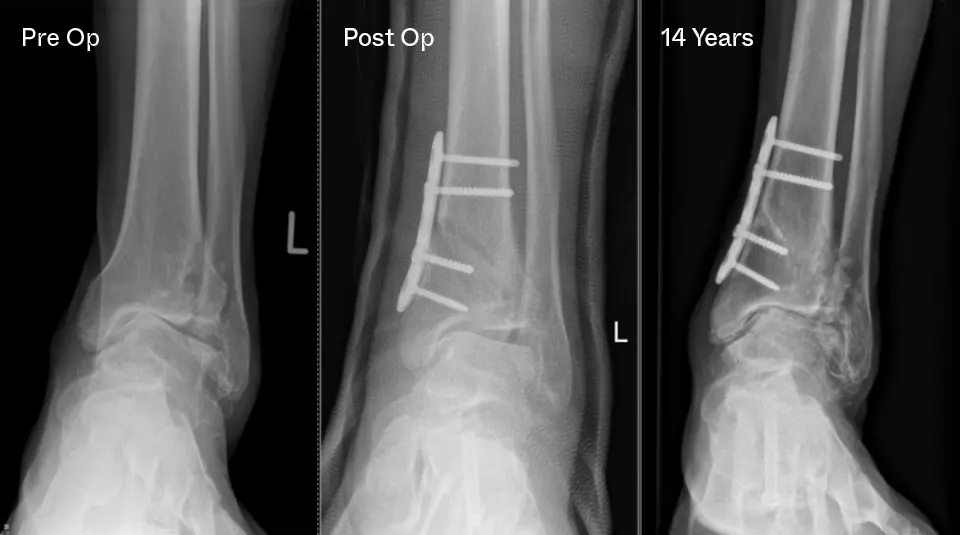
Distal tibial realignment
Treatment depends on the severity of the arthritis. In the earlier stages, physiotherapy, injections and orthotics may help. More advanced arthritis may require ankle realignment, ankle replacement or ankle fusion. When ankle arthritis occurs in association with a cavus foot, the underlying deformity will also need to be corrected to achieve the best long-term outcome.
Why Is Pes Cavus Often Missed?
Many patients have undergone treatment for repeated ankle sprains, tendon pain or even stress fractures without anyone recognising that the underlying foot shape is the cause. The symptoms are treated, but the abnormal forces remain. As a result, the problem often recurs.
One of the most important parts of assessment is looking beyond the immediate injury and identifying whether the underlying biomechanics are contributing to the problem. Treating the cause, not just the consequence, is often the key to achieving a successful long-term outcome.
Surgical Treatment – Realignment of Pes Cavus
There is no single operation to correct a cavus foot. Every patient is different, and successful treatment depends on identifying the specific combination of deformities that are present. Careful clinical assessment, together with weight-bearing X-rays and, where appropriate, MRI or CT scans, allows an individual surgical plan to be developed.
The alignment of the tibia, ankle, heel, hindfoot, midfoot and forefoot all need to be carefully assessed. Equally important is the condition of the surrounding soft tissues, including ligament stability, tendon function, muscle balance and areas of soft tissue tightness. The objective is to restore normal biomechanics rather than simply correct the appearance of the foot.
Surgical reconstruction therefore often involves a combination of soft tissue procedures and bony realignment procedures. These are tailored to the individual patient and are frequently performed together during a single operation.
Soft Tissue Procedures
Soft tissue surgery is aimed at restoring the balance of the muscles, tendons and ligaments around the foot and ankle. Depending on the underlying problems, this may include:
- Lateral ligament repair or reconstruction
- Peroneal tendoscopy for persistent peroneal tendonitis
- Repair or reconstruction of torn peroneal tendons
- Plantar fascia release where a tight plantar fascia contributes to the deformity
- Tendon transfers to improve muscle balance and restore foot function
Bony Realignment Procedures
The bony reconstruction is designed to restore the mechanical alignment of the lower limb, foot and ankle. The aim is to re-balance the body weight more evenly through the foot and ankle.
Correction may be required at several different levels depending on where the deformity originates.
Tibia
It is not common, but occasionally the deformity begins above the ankle and in these cases, a tibial osteotomy may be required – I now perform this surgery minimally invasively which significantly improves healing and reduces the risks in this extensive surgery.
Ankle
In patients with early signs of ankle arthritis an arthroscopy may be needed to address the early cartilage wear. In advanced ankle arthritis, ankle replacement or ankle fusion can be performed together with realignment of the cavus foot to restore both alignment and joint function.
Heel (Calcaneus)
A calcaneal osteotomy repositions the heel towards the outside of the ankle / leg. This is one of the most common procedures performed for Pes cavus. I perform this surgery minimally invasively, which significantly reduces the surgical trauma and complication rates. Occassionally tradional “open” surgery is still needed for more complex cases.
Hindfoot
If there is symptomatic or severe arthritis in the hindfoot, this will need a fusion / arthrodesis of the joint – correction of the heel malalignment can often be achieved with this procedure at the same time avoiding the need for an additional calcaneal osteotomy. Again this is very individual to the case.
Midfoot and Forefoot
The alignment of the forefoot is as important as the heel in this condition. If there is a malaligned (plantarflexed) 1st Metatarsal, this rotates the forefoot accentuating the pes cavus and will need treating with an elevating osteotomy to make the forefoot parallel to the floor (plantigrade). I perform this surgery minimally invasively, to minimise recovery and risk.
Recovery
The recovery from surgery will depend on several variables, and depends on the procedures performed. Most patients require a period of non-weight-bearing using crutches, followed by progressive weight-bearing in a walking boot. Although everyday activities usually become easier over the first few months, full recovery following cavus reconstruction commonly takes 6–12 months.
Please read the information on the linked pages for more exact information regarding the risks and recovery.
My Philosophy
Successful treatment of a cavus foot is not simply about repairing a ligament, fixing a tendon or healing a fracture. The aim is to understand why these problems occurred in the first place and restore the normal mechanics, reducing abnormal loading & pain, improve function and provide a long lasting solution.