Claw Toes, Hammer Toes and Mallet Toes

What are claw, hammer and mallet toes?
These terms are often used interchangeably, but they actually describe slightly different deformities of the smaller toes.
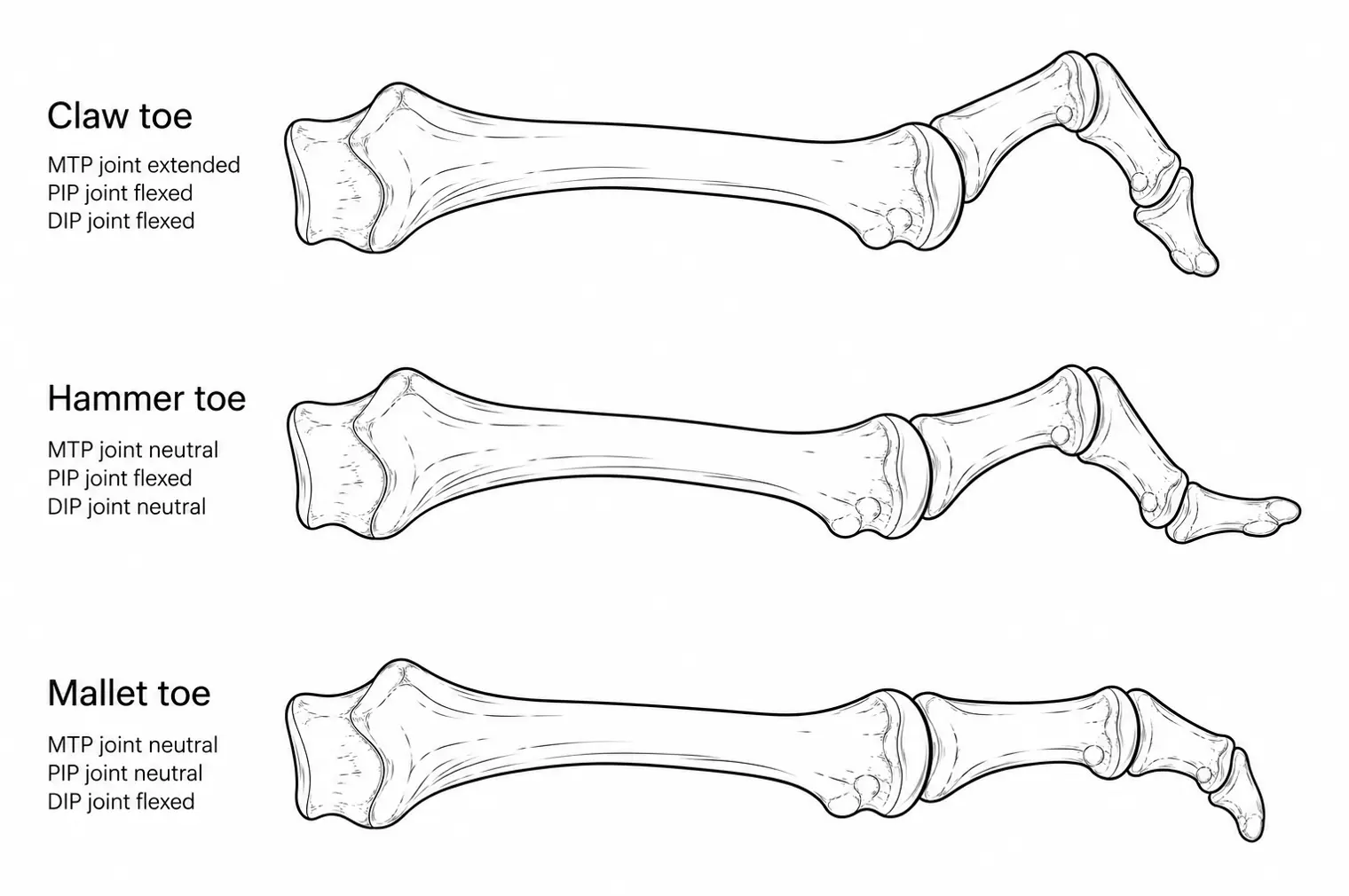
Mallet toe – the end joint of the toe (DIP joint) is bent down.
Hammer toe – the middle joint of the toe (PIP joint) is bent down.
Claw toe – the toe is lifted upwards where it joins the foot (MTP joint), while the other joints of the toe bend downwards.
Although these deformities can look quite similar, understanding which joints are affected and why the toe has become deformed is important because the treatment may be quite different.
What problems do they cause?
The most obvious problem is often pressure from footwear over one of the prominent joints. The skin can become red and painful and a hard corn may develop. In more severe cases, particularly where sensation or circulation is poor, the skin can break down or ulcerate.
A claw toe can also cause pain underneath the ball of the foot. As the toe lifts upwards, increased pressure develops beneath the metatarsal head. This is called metatarsalgia and can sometimes be confused with a Morton’s neuroma.
The toes may also gradually diverge or cross over one another as the supporting ligaments around the joint become stretched or damaged.
Why do the toes become deformed?
There are many different reasons – most commonly its an inherited foot shape that is causing the problem.
The toes are held straight by a complex balance between the strong pull of flexor and extensor tendons and a counter pull by the small muscles of the foot – the lumbricals and interossei.
A common cause is tight extensors which creates an imbalance and over powers the small muscles. Once the toe is pulled slightly out of position, the small muscles cant function and the toe bends and deforms.
Another common cause I see, is forefoot overload - due to long or overloaded metatarsals. This puts increased force on the MTP joint and the plantar plate – the strong ligament sling underneath the joint which helps hold the toe in position. Over time the plantar plate stretches or tears, causing the toe to lift and create an imbalance in the tendons / muscles and eventually producing a clawed or displaced toe.
This distinction is important. Simply straightening the visible bend in the toe may not correct the underlying problem.
Non-operative treatment
Many toe deformities do not require surgery.
Silicone sleeves or toe covers can protect prominent joints from rubbing against shoes. Wider or softer footwear can also make a considerable difference.
If the main problem is pain underneath the ball of the foot, an insole or orthotic with a pre-metatarsal support can help redistribute pressure away from the painful area. Rocker bottom trainers are especially good.
Physiotherapy can also be useful, particularly while the deformity remains flexible, by working on the small muscles which help control the toes. This is a particularly specialised physiotherapy area.
When is surgery considered?
There are many different operations that can be used and close examination of the whole foot and leg is necessary.
Its vitally important to understand the origin of the deformity to select the appropriate operation or combination of operations. These range from simple tendon releases to combined procedures using fusions, osteotomies and ligament reconstructions.
Some surgery can be performed minimally invasively and some using open techniques or a combination of both.
Certainly Minimally Invasive surgery has transformed surgery of the forefoot and has been a huge advance in recent years. Key hole techniques minimise the trauma to the toes and foot. The operations , in many cases, are often better than the traditional open procedures with better outcomes , quicker recoveries and less complications.
Operations
Flexor tendon release (Flexor Tenotomy)
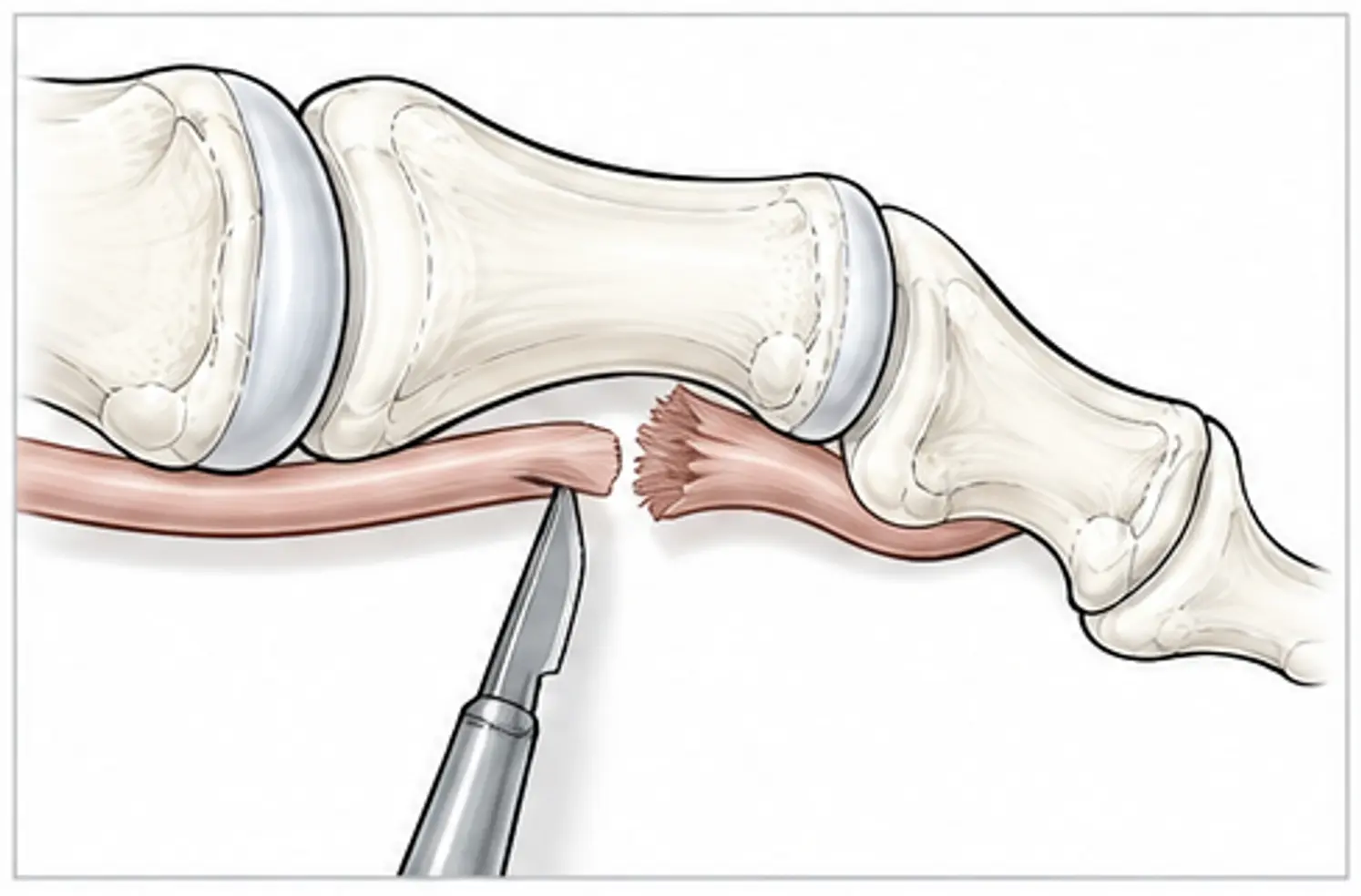
A small procedure that can be performed under sedation to release an over tight tendon. This is the simplest type of procedure and has a very quick recovery, with a return to full activity usually possible in 1-2 weeks.
Further information on Flexor tenotomy.
It is very reliable in relieving pain but often the toe does not come out fully straight. It is usually performed at the DIP joint for a mallet or early claw toe. For an isolated hammer toe this can be performed at the DIP joint as well.
PIP joint fusion
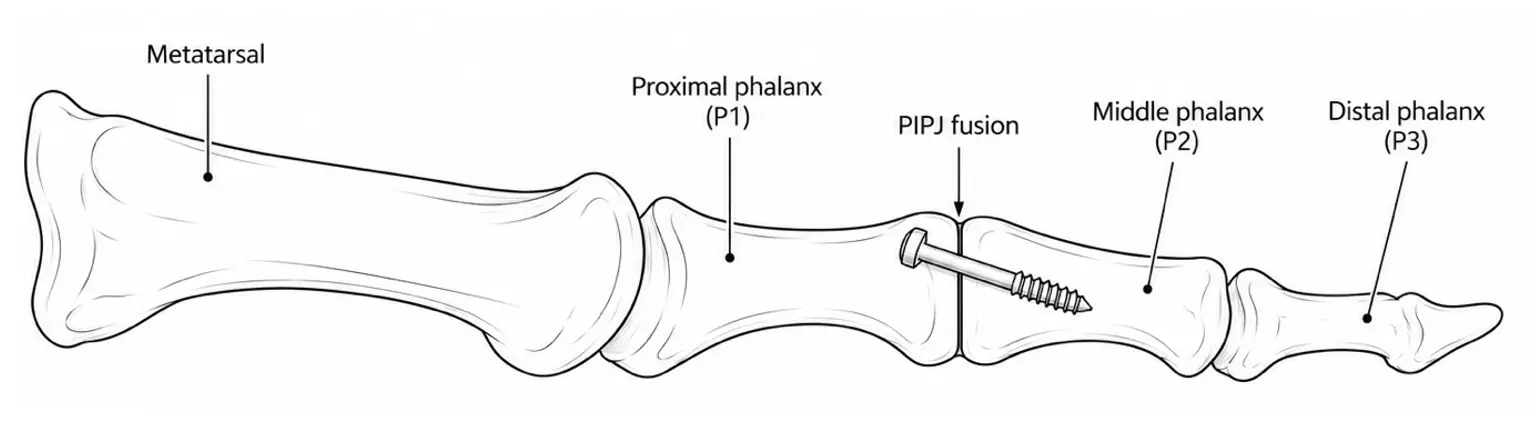
For a more established hammer toe, the middle joint of the toe may have become stiff and no longer straighten.
In a PIP joint fusion, the joint is exposed and a small amount of bone is removed from each side. The toe is straightened and the two bone surfaces are held together so that they heal as one.
The toe can be held with an implant inside the bone or, in some circumstances, with a temporary wire extending through the end of the toe.
This is a very reliable operation which produces excellent long-term correction.
Further information on PIP J Fusion.
Minimally invasive realignment
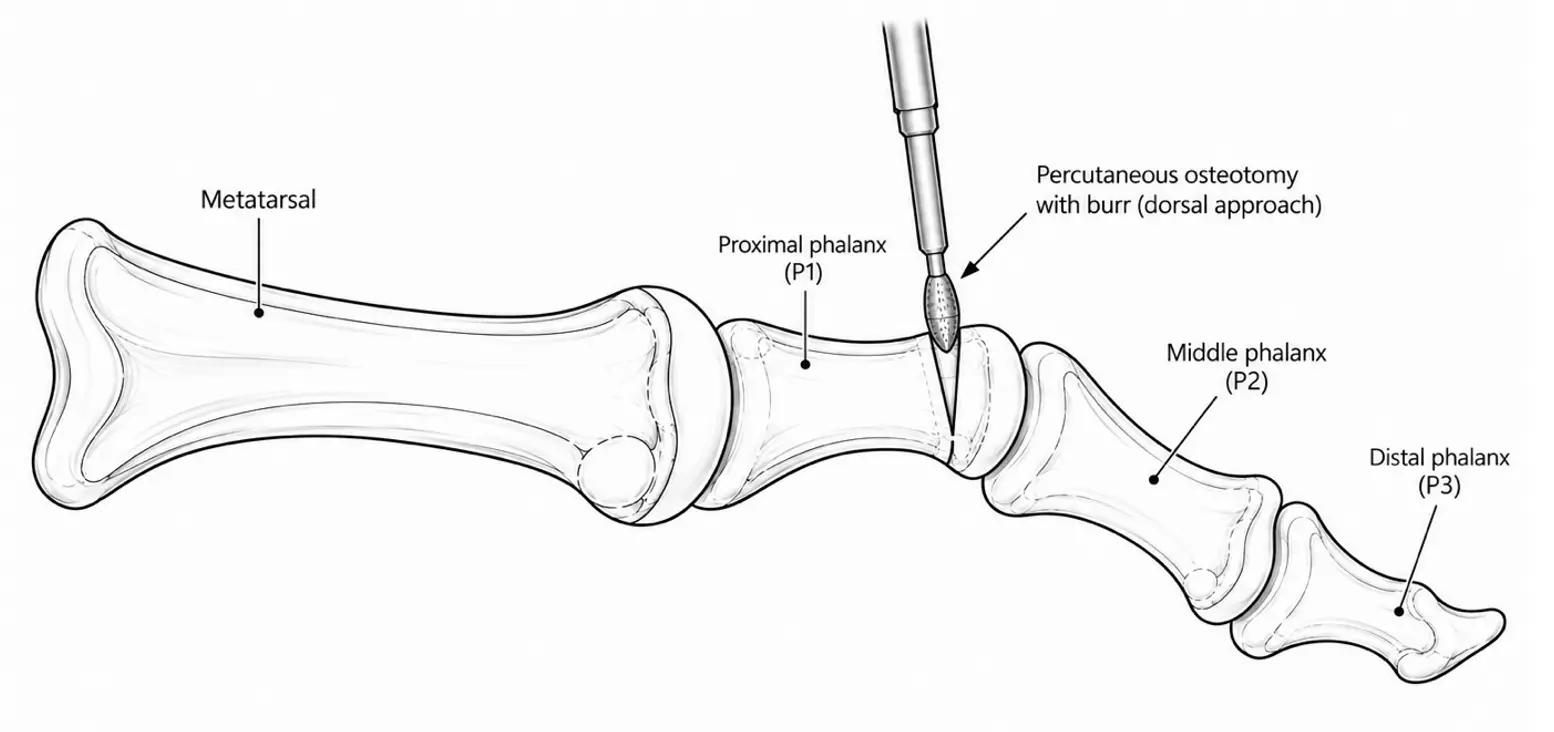
A newer alternative for some hammer toe deformities is to realign the toe without removing or fusing the joint.
Through tiny incisions, a small minimally invasive burr is used to make partial cuts in the bones around the deformity. The bones can then be gently cracked and realigned so that the toe sits straighter overall.
The corrected position is maintained with taping while the small osteotomies heal.
This is a relatively small procedure and can usually be performed under sedation and local anaesthetic.
Metatarsal shortening
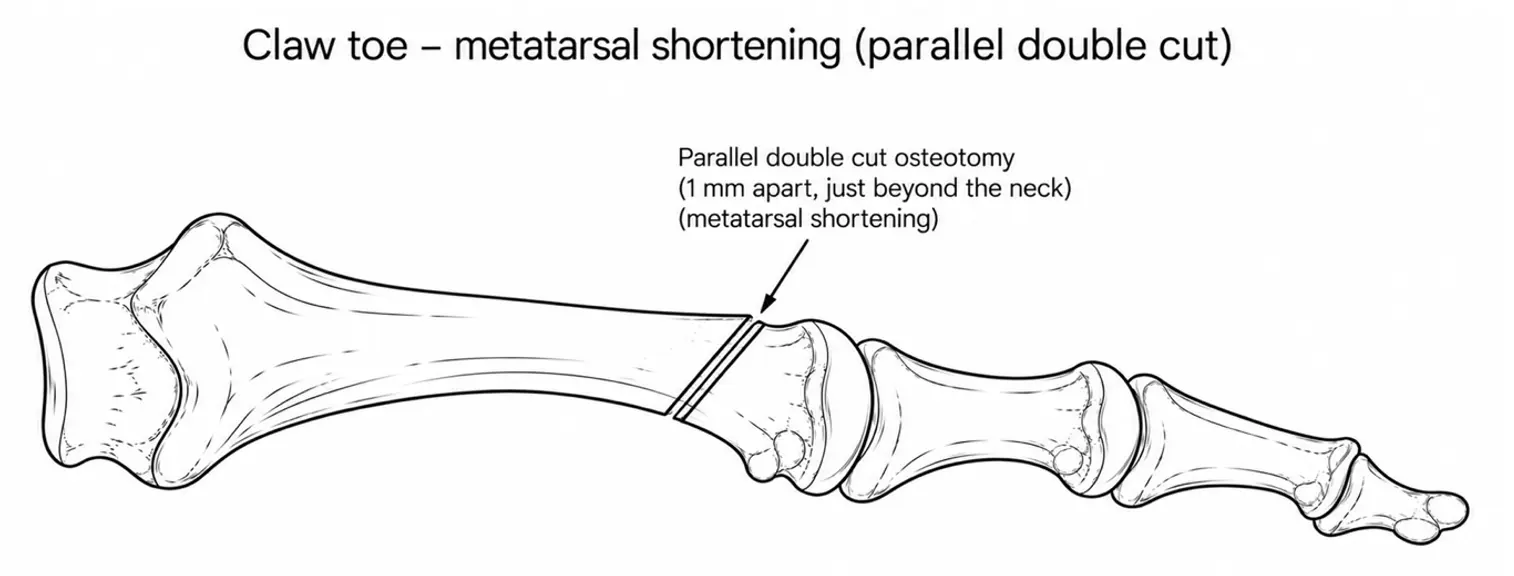
Sometimes the bend in the toe is only part of the problem.
If the MTP joint is tight or unstable, or there is significant pain underneath the ball of the foot, the metatarsal itself may need to be shortened.
A long or overloaded metatarsal can progressively stretch the tissues around the MTP joint and damage the plantar plate. As the joint becomes unstable, the toe lifts upwards and the balance of the tendons changes, causing the toe to claw.
Shortening the metatarsal reduces this tension and allows the toe to return towards a more normal position.
Traditionally this has been performed through an open incision using a Weil osteotomy, which is usually fixed with a screw. It is very good at releiveing metatarsalgia, but there were common issues with stiffness and scarring causing a “Floating Toe”
I use a minimally invasive technique now in the vast majority of cases – a Distal Metatarsal Minimally Invasive Osteotomy or DMMO. A small wedge of bone is removed through a keyhole incision over the joint, to shorten the metatarsal. As none of the ligaments are damaged, the osteotomy is inherently stable and does not normally require a screw.
A Metatarsal shortening procedure is frequently used in combination with other procedures, such as a PIP joint fusion, when more than one part of the toe deformity needs correcting.
Further information on DMMO.
DIP joint fusion
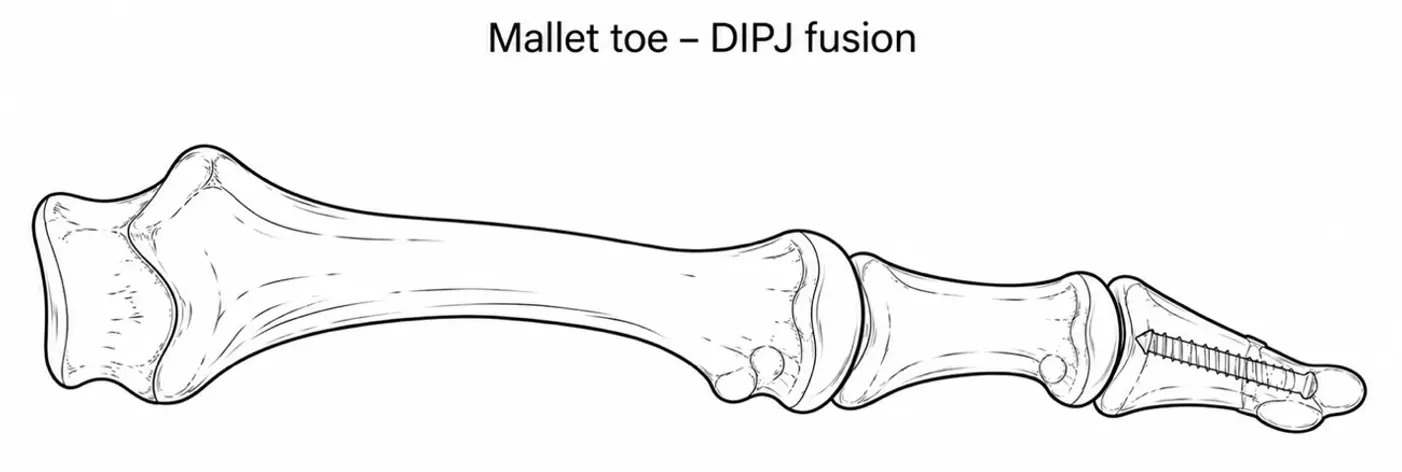
Fusion of the end joint of the toe is required less commonly, as a flexor tendon release will often correct the problem.
When the DIP joint is stiff or significantly deformed, however, the damaged joint surfaces can be removed, the toe straightened and the joint fixed with a small screw until it heals.
The principle is very similar to a PIP joint fusion.
Further information on DIPJ fusion.
My approach
Claw and hammer toes may look like relatively simple deformities, but the underlying cause can be quite different from one patient to another.
The key is not simply to straighten the toe, but to understand why it has become deformed.
In a flexible toe, this may mean no more than releasing a tight tendon. In a stiff hammer toe, the joint itself may need correcting. If the problem originates at the ball of the foot, simply operating on the toe will not address the underlying cause and the metatarsal or supporting ligaments may also need treatment.
My aim is therefore to use the smallest operation that reliably addresses the underlying problem, using minimally invasive techniques where they offer an advantage and combining procedures when necessary to produce a stable, comfortable and durable correction.