Have I ruptured my Achilles?

The best way to test for an Achilles rupture is using the Achilles Tendon Resting Angle or ATRA.
There is also loss of the normal contours of the Achilles.
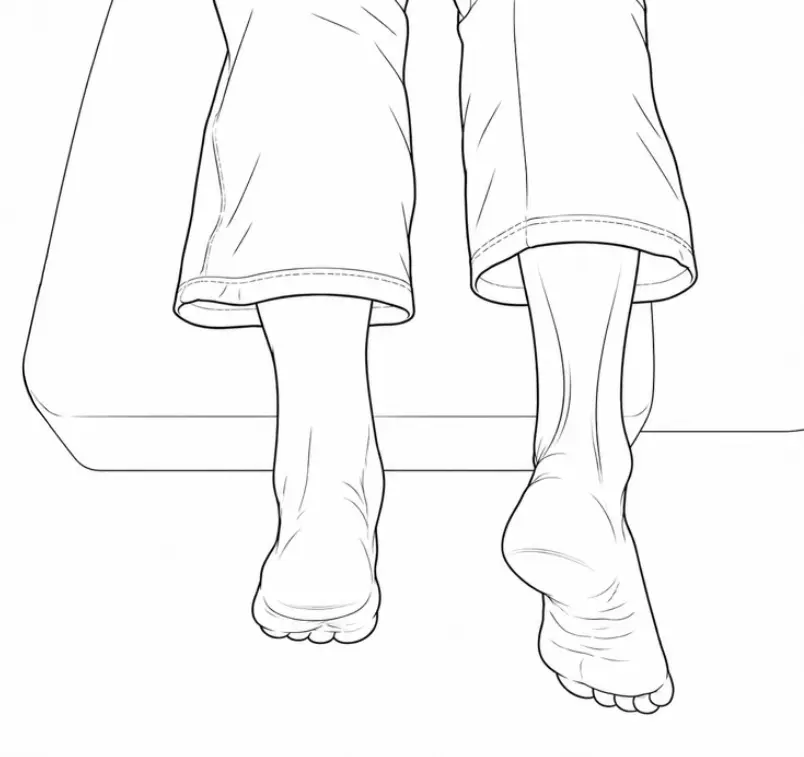
Lie face down on a bed or kneel down on a chair, with both feet hanging freely beyond the bed / chair.
Normally, the natural resting tension in the Achilles holds the ankle in a plantarflexed position, preventing the foot from hanging vertically down.
With a rupture, this tension is lost and the affected foot hangs vertically down - Comparing the two sides makes this easier to recognise.
If the injury is several days old and has been protected in a boot or plaster, the foot may temporarily hold in a normal position - It can take time to relax and hang vertically.
This happens most often during sports and it can feel like you have been hit by another player. Squash, Tennis and Padel are the most common sports for this.
Often there is a sudden snap or the sensation of being kicked in the calf, during a push-off or change of direction. The ankle will feel weak with difficulty walking normally – although it is usually good enough to walk on. Often there is no pain or very little pain in the achilles.
A shallow dent may be visible above the heel, or you may be able to feel the defect. Compare it with the other side which should be a very defined thick cord all the way along. Often though, swelling can obscure this.
Other Tests
The calf squeeze test or Simmonds test - it can be an unreliable test and I tend not to use it. Squeezing the calf normally causes the foot to plantarflex. This is done lying down prone. Absent or reduced movement suggests a rupture. It’s actually quite difficult to interpret.
Functional tests
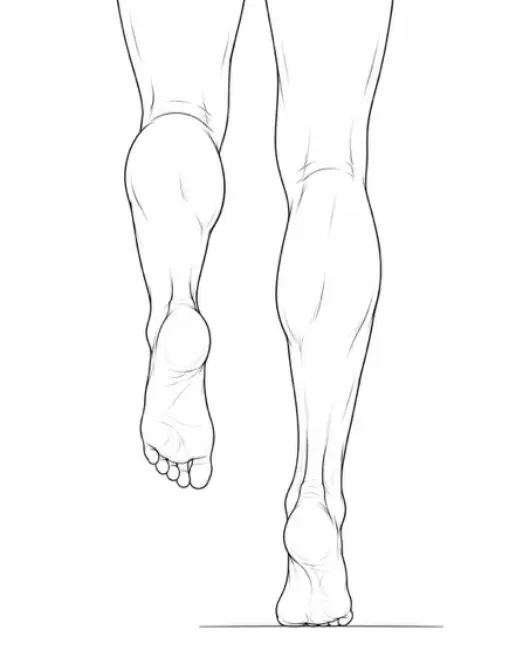
- Can you walk on tiptoe?
- Can you rise onto both tiptoes and then lift the uninjured leg, taking all the weight on the injured side?
If either test is painful, try bending the knee a little at the same time.
With a full rupture it’s impossible to do - If you can do it even with pain, and have some power then a rupture is very unlikely.
False tests
Moving the ankle up & down – many patients say they didn’t realise it was ruptured as they could still move their ankle.
Being able to move the ankle up and down is still possible with an Achilles rupture - as the other tendons and muscles to the foot & toes also provide this function.
Do I need a Ultrasound scan? Yes.
The diagnosis is usually made clinically - The best treatment depends on the Ultrasound findings. It’s very important to have an ultrasound scan - This will identify the rupture very clearly and also which part of the tendon has ruptured. Importantly it will assess whether there is a gap between the tendon ends and whether surgery is indicated.
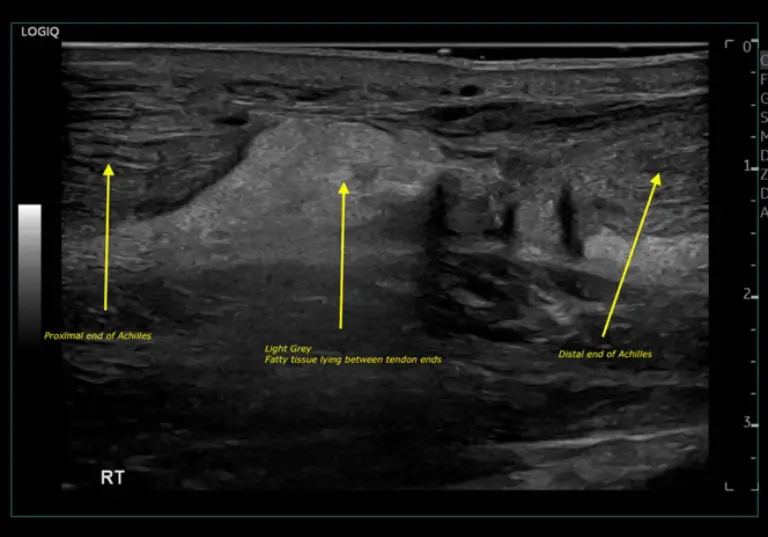
The uss showing a light grey mound (central arrow) of fatty tissue lying between the two rounded ends of the rupture.
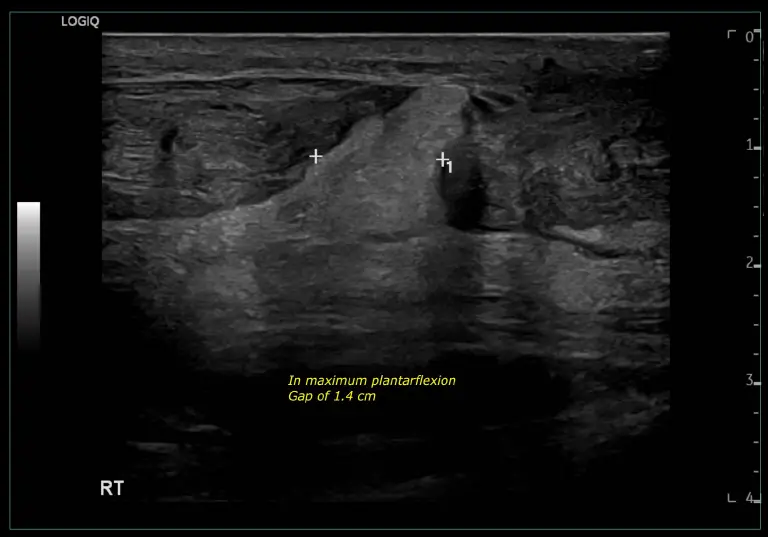
Foot held in maximum plantarflexion to try and bring the ends of the tendon together. In this case there is still a 1.4cm gap.
Do I need an MRI? Not normally.
MRI may be required in more complex scenarios but is not used routinely.
Do I need an Xray? Not for an Achilles rupture.
Xray is only needed if there is a suspicion that there may be an ankle fracture too. This is a very rare combination.
This information and assessment is supported by the British Foot and Ankle Society.